


Anti-inflammatory fragment
The C-terminal Lys-Pro-Val fragment of alpha-MSH retained anti-inflammatory activity in animal models.
Hiltz & Lipton, FASEB J 1989 →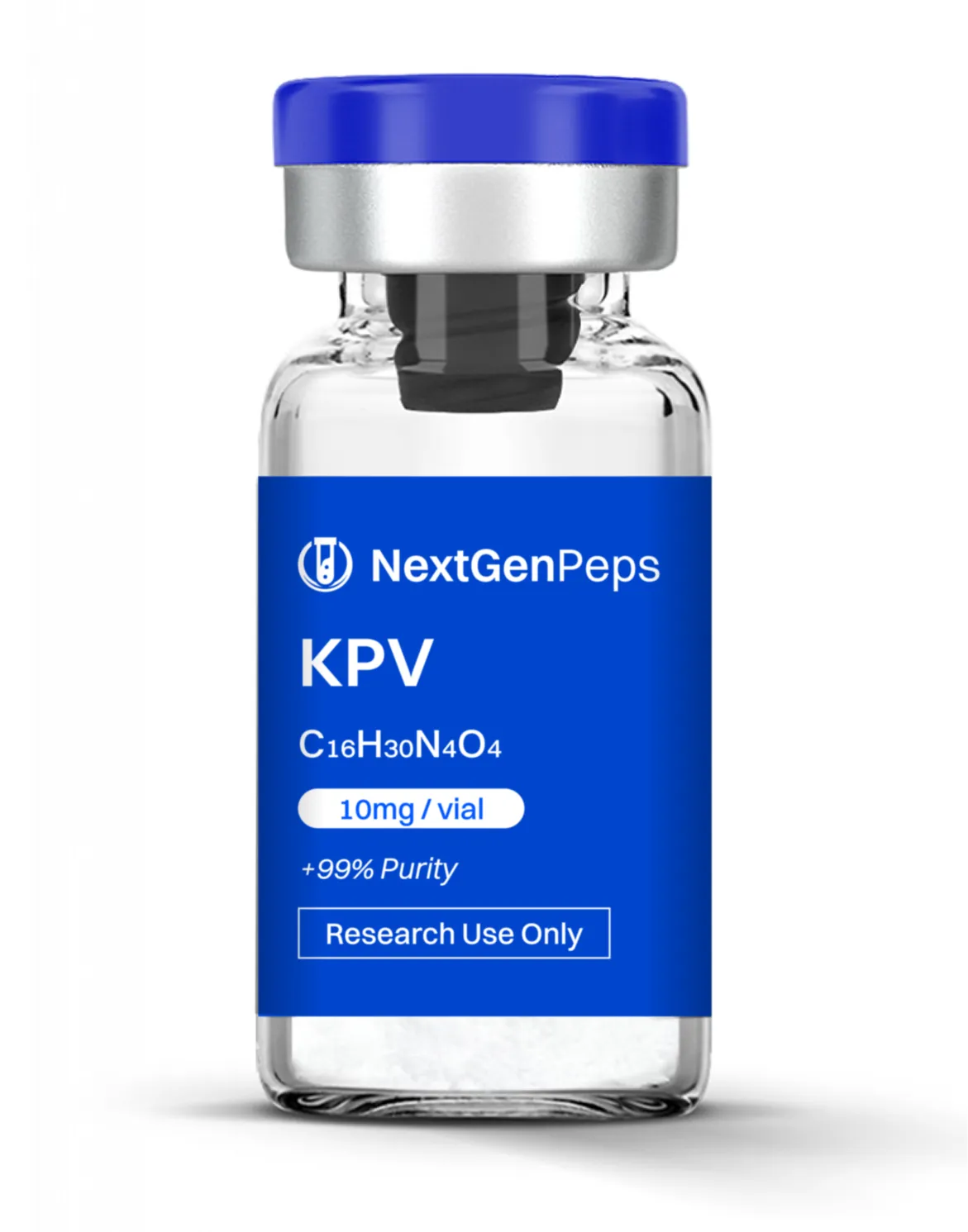
4.7· 3 reviewsout of 5In stock
Buy KPV peptide for research: 10 mg vials of the Lys-Pro-Val tripeptide from alpha-MSH, 99%+ purity by UHPLC-MS, public COA. Ships within 24 hours.
Bundle & Save
Need more?
Secure checkout · Visa · Mastercard · American Express · Discover · PayPal · Venmo · Apple Pay
99.007%
Reported purity · Tested by Janoshik
KPV peptide, in brief. Inflammation is the response to injury or infection, and when it runs on longer than it should it becomes the problem rather than the repair. KPV is a three-amino-acid piece of a naturally occurring hormone, studied for whether it can turn that response down. Almost all of that work is in the gut: in two mouse models of colitis it reduced inflammation of the bowel, and in cultured intestinal and immune cells it lowered the release of inflammatory signalling molecules [2,3]. What makes it unusual is where it acts. Rather than docking onto a receptor on the cell surface, it is carried inside the cell by the transporter the gut uses to absorb peptides from food, and it works from in there. It is the tripeptide lysine-proline-valine, the last three amino acids of alpha-melanocyte-stimulating hormone (alpha-MSH), and unlike the full hormone it does not stimulate pigmentation. KPV is not an FDA-approved drug, and no clinical trials have been published. NextGenPeps supplies it for laboratory use only.
KPV turns inflammation down in the tissues where it has been studied, and that is the whole of its described activity. In two mouse models of colitis it reduced inflammation of the bowel, and in cultured intestinal and immune cells it lowered the release of inflammatory cytokines, the signalling molecules that recruit and activate immune cells [2,3].
It does this without the other main action of the hormone it comes from. Unlike alpha-MSH, KPV does not stimulate pigmentation.
Everything known about its activity comes from cell and animal work. No clinical trials of KPV have been published.
Most of what is known comes from a 2008 study by Dalmasso and colleagues. In intestinal epithelial cells and immune cells, KPV was carried into the cell by PepT1 (Figure 1). PepT1 is a transporter that normally absorbs small peptides from digested food, and it is induced in inflamed colon.
Inside the cell, KPV acts on inflammatory signalling. At nanomolar concentrations it reduced activation of the NF-kappaB and MAP kinase pathways and lowered secretion of inflammatory cytokines. Blocking PepT1 removed the effect [2].
The parent hormone's receptor does not appear to be involved. Kannengiesser and colleagues found that KPV reduced inflammation in two mouse colitis models, and that the effect persisted in mice without a working melanocortin-1 receptor. That suggests KPV acts inside the cell rather than through the receptor that alpha-MSH uses [3].
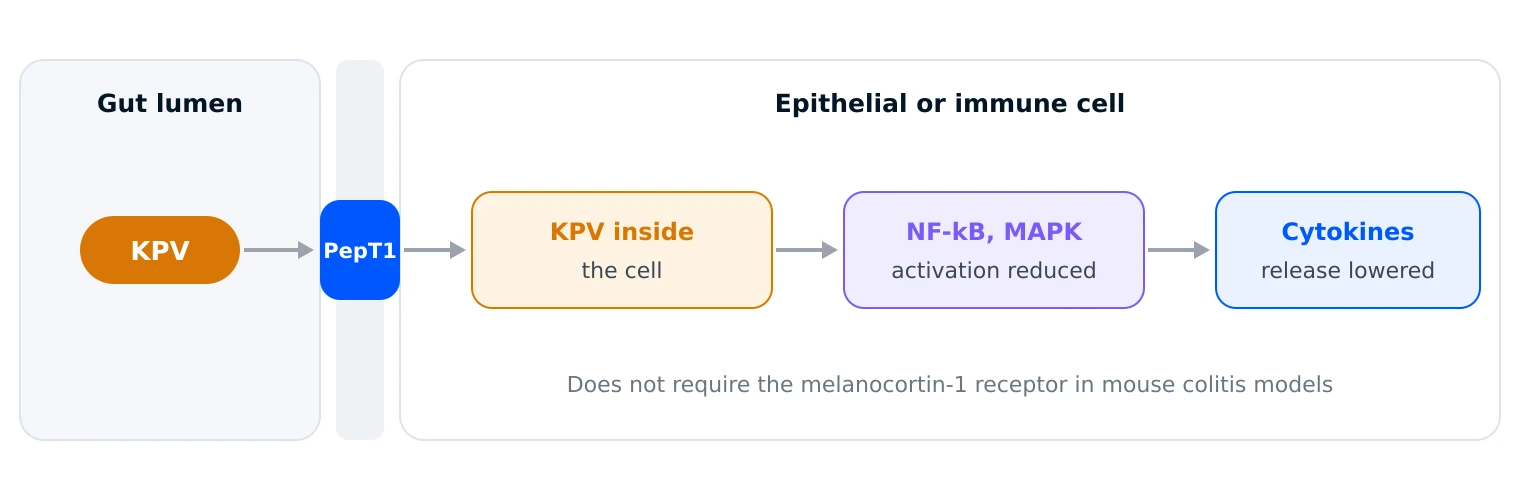
Figure 1. The proposed route of action in intestinal cells. Based on cell and mouse studies [2,3]. KPV's anti-inflammatory effect in these models depended on uptake through PepT1 and did not require the melanocortin-1 receptor.
KPV separates one activity of its parent hormone from the rest. In 1989, Hiltz and Lipton reported that this C-terminal fragment reproduced much of the full hormone's anti-inflammatory activity in animal models [1].
Its size is the second reason researchers use it. KPV is small enough to fit the intestine's di- and tripeptide transporter, which makes it a peptide with anti-inflammatory activity but without the pigmentary effects of the parent hormone [2].
Work on KPV runs from the first anti-inflammatory fragment report to the current compounding review, with the main cell and mouse findings clustered in 2008 (Figure 2).
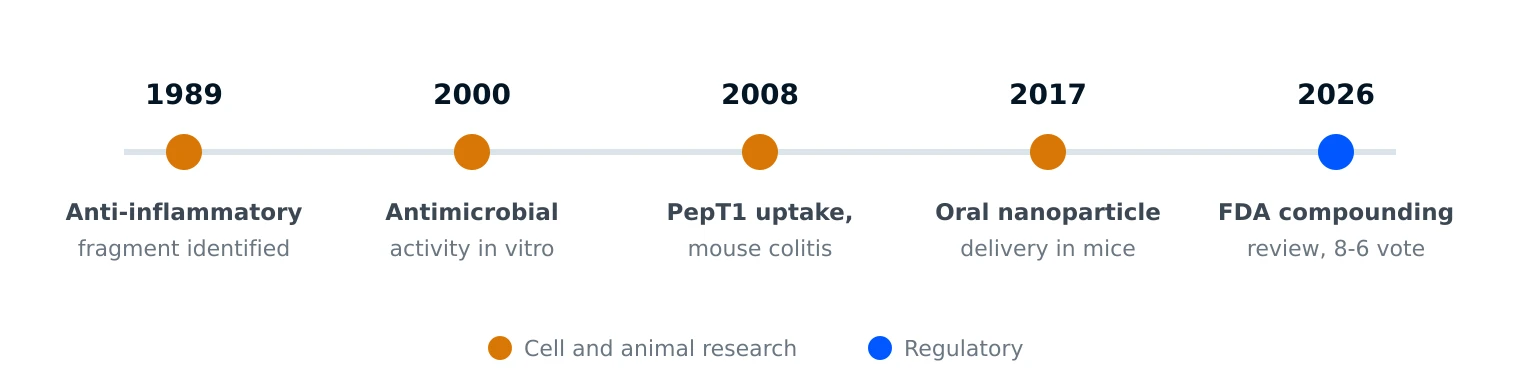
Figure 2. KPV research milestones. All biological findings to date come from cell and animal studies. No clinical trials of KPV have been published.
What the evidence does and does not show. KPV has a consistent preclinical record in mouse colitis, from more than one research group. There are no published clinical trials, no pharmacokinetic data and no studies of body weight or metabolism. Claims that KPV helps with weight loss, acne or other conditions are not supported by published research.
No. KPV is not an FDA-approved drug for any use. On April 15, 2026, the FDA said it would remove twelve peptides, including KPV, from Category 2 of its interim list of bulk substances that raise significant safety concerns for pharmacy compounding. Removal did not place KPV on the list of substances that may be compounded [6]. At its July 23, 2026 meeting, the FDA's Pharmacy Compounding Advisory Committee voted 8 to 6, with one abstention, to recommend adding KPV to that list. The vote is not binding, and FDA must still complete rulemaking before anything changes [7].
The name is simply the one-letter code for its three amino acids: K for lysine, P for proline and V for valine.
Its parent hormone is much larger. Alpha-MSH is a 13-residue hormone cut from the precursor pro-opiomelanocortin. Its central His-Phe-Arg-Trp stretch binds melanocortin receptors and drives pigmentation, while its C-terminal residues 11 to 13 form KPV (Figure 3).
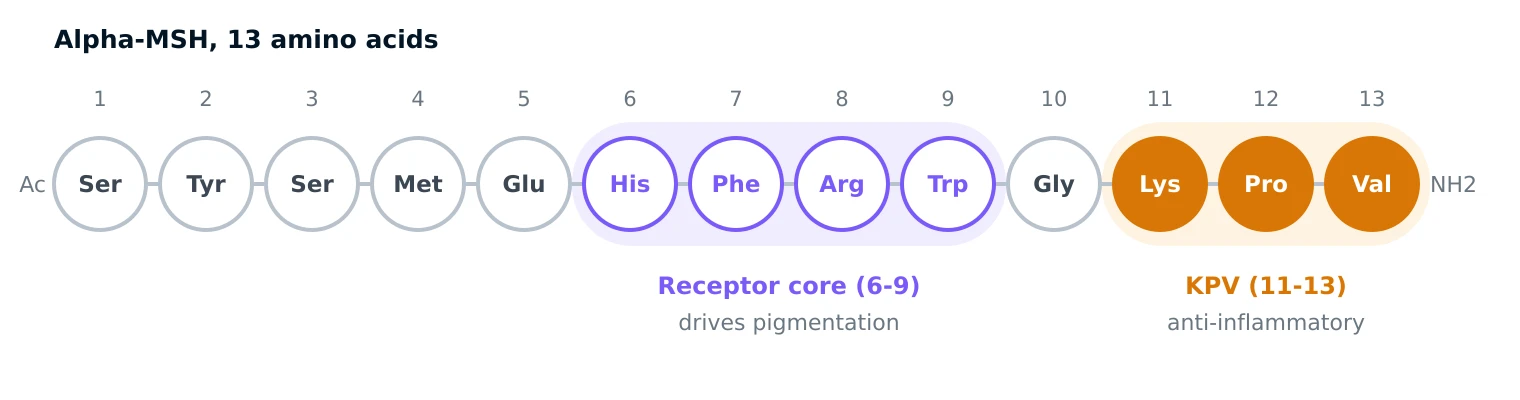
Figure 3. Where KPV comes from. Alpha-MSH is 13 amino acids long. Residues 6 to 9 are the core that binds melanocortin receptors and drives pigmentation. KPV is residues 11 to 13 and does not include that core.
Research on KPV falls into a few areas.
Intestinal inflammation. In mice, KPV given in drinking water reduced weight loss, tissue damage and inflammatory markers in DSS- and TNBS-induced colitis [2], and reduced inflammation in a T-cell transfer colitis model [3].
Oral, colon-targeted delivery. Because KPV is small and absorbed by PepT1, it is a common test cargo for oral delivery systems. Hyaluronic-acid-coated nanoparticles carrying KPV reduced colitis in mice and promoted mucosal healing at a much lower dose than free KPV [4].
Antimicrobial activity. Alpha-MSH and its C-terminal fragment KPV inhibited colony formation by Staphylococcus aureus and Candida albicans in vitro [5].
Skin and other tissues. The anti-inflammatory activity of alpha-MSH fragments has also been studied in skin inflammation models, but this literature is smaller and mostly older.
Every KPV lot is tested by an independent laboratory, and the certificate of analysis is published in the NextGenPeps COA library.
Analytical testing. Identity and purity by UHPLC-MS, 99.007% purity (independent lab, April 30, 2026).
Vial size. 10 mg of lyophilized KPV per vial.
Fulfilment. Orders ship within 24 hours from the United States, with free US shipping on orders over $150.
Research use only. KPV is sold strictly for in vitro and approved animal research. It is not for human or veterinary use and is not sold as a drug, cosmetic, supplement or diagnostic.
KPV is also one of the four components of KLOW, alongside GHK-Cu, BPC-157 and TB-500.
Format. Supplied as white lyophilized powder in a sealed vial and reconstituted with sterile or bacteriostatic water before use. No dosing instructions are supplied, and none should be inferred from the studies above.
Solubility. KPV is a short, charged peptide and dissolves readily in water.
Stability. Short peptides are vulnerable to peptidases. In cell and tissue work, the presence of serum or tissue extracts can shorten KPV's half-life, which matters when comparing results across protocols.
Clinical data. No trials, safety studies or pharmacokinetic data have been published.
The exact molecular target. KPV reduces NF-kappaB activation after entering the cell, but the protein it binds to do this has not been firmly identified.
Effects outside the gut. Most modern work is in intestinal models. Evidence in skin and other tissues is limited.
Weight and metabolism. There are no published studies of KPV on body weight, appetite or metabolism.
Research Use Only. The statements made within this website have not been evaluated by the US Food and Drug Administration. These materials are not intended to diagnose, treat, cure or prevent any disease and are not intended for human or veterinary use. Studies described on this page are reported for scientific context and are not guidance of any kind.
The C-terminal Lys-Pro-Val fragment of alpha-MSH retained anti-inflammatory activity in animal models.
Hiltz & Lipton, FASEB J 1989 →Alpha-MSH and KPV inhibited Staphylococcus aureus and Candida albicans colony formation in vitro.
Cutuli et al., J Leukoc Biol 2000 →KPV entered intestinal epithelial and immune cells via PepT1, reduced NF-kappaB and MAP kinase activation, and reduced DSS and TNBS colitis in mice.
Dalmasso et al., Gastroenterology 2008 →KPV reduced inflammation in mouse colitis models without requiring the melanocortin-1 receptor.
Kannengiesser et al., Inflamm Bowel Dis 2008 →Hyaluronic-acid-functionalized nanoparticles delivered KPV to the colon and reduced colitis in mice.
Xiao et al., Mol Ther 2017 →Hiltz ME, Lipton JM · FASEB J 1989 · PubMed
Dalmasso G, Charrier-Hisamuddin L, Nguyen HT, et al. · Gastroenterology 2008 · PubMed · Free full text
Kannengiesser K, Maaser C, Heidemann J, et al. · Inflamm Bowel Dis 2008 · PubMed
Xiao B, Xu Z, Viennois E, et al. · Mol Ther 2017 · PubMed · Free full text
Cutuli M, Cristiani S, Lipton JM, Catania A · J Leukoc Biol 2000 · PubMed
US Food and Drug Administration · FDA, April 2026
AJMC staff · AJMC, July 2026
KPV is supplied as lyophilized powder in a sealed, labelled 10 mg vial, with the lot's certificate of analysis published in the NextGenPeps COA library. Please inspect the sealed package when it arrives and contact support promptly if the package or labeling appears damaged.
Orders ship within 24 hours from the United States via USPS for orders placed before the 5:00 PM PDT cutoff. Transit times are typically 3–7 business days, depending on destination and carrier conditions. Tracking information is provided when available.
Store lyophilized KPV at −20 °C or below in the sealed vial, protected from light and moisture. After reconstitution with sterile or bacteriostatic water, hold the solution at 2–8 °C and avoid repeated freeze-thaw cycles.
Due to the nature of research materials, NextGenPeps orders are final and are not eligible for refunds, returns, or exchanges. Review the shipping and reship policies before ordering.
No. NextGenPeps materials are supplied strictly for laboratory research and development use and are not intended for human or animal consumption, clinical use, diagnostic use, cosmetic use, or dietary use.
4.7out of 5 · 3 reviews
The webpage is very handy. I was about to check out and got a reminder to add BAC Water that saved me the trouble of making 2 transactions
Luis D.
The label matched the COA. Vial stayed sealed and reconstituted without impurities
Corey H.
A great price point for KPV at this level of quality. I bulk up and freeze and have no problems reconstituting from months of cold storage.
Edison T.
KPV is the tripeptide lysine-proline-valine, the C-terminal residues 11 to 13 of alpha-melanocyte-stimulating hormone. It is studied for anti-inflammatory activity, mainly in intestinal cells and mouse colitis models. It does not stimulate pigmentation, is not an FDA-approved drug and has no published clinical trials.
In cell and mouse studies, KPV is taken into intestinal epithelial and immune cells by the PepT1 transporter, where it reduces activation of the NF-kappaB and MAP kinase inflammatory pathways and lowers inflammatory cytokine release. Its effect in mouse colitis did not require the melanocortin-1 receptor. These are preclinical findings only.
KPV is used mainly to study intestinal inflammation in mouse colitis models, as a test cargo for oral and colon-targeted delivery systems such as hyaluronic acid nanoparticles, and in antimicrobial work, where alpha-MSH fragments inhibited Staphylococcus aureus and Candida albicans in vitro.
NextGenPeps supplies KPV in 10 mg vials for laboratory research, with an independent certificate of analysis for every lot (99.007% purity by UHPLC-MS on the current lot). Orders ship within 24 hours from the United States. KPV is sold for in vitro and approved animal research only.
No. KPV is not approved for any use. In April 2026 the FDA removed it from Category 2 of its compounding safety-concern list, and in July 2026 an FDA advisory committee voted 8 to 6 to recommend allowing it in pharmacy compounding. That vote is not binding, and FDA has not finalized any change.
No clinical safety data have been published. KPV was well tolerated in mouse studies, but animal results do not establish safety, and there are no studies of its effects on weight, skin or other conditions. KPV is sold for research use only.
✓ 99.72% purity
$89.00$71.00
✓ 99.62% purity
$159.00$127.00
✓ 98.848% purity
$52.00$42.00
✓ 99.748% purity
$46.00$37.00
✓ 99.73% purity
$74.00$59.00